
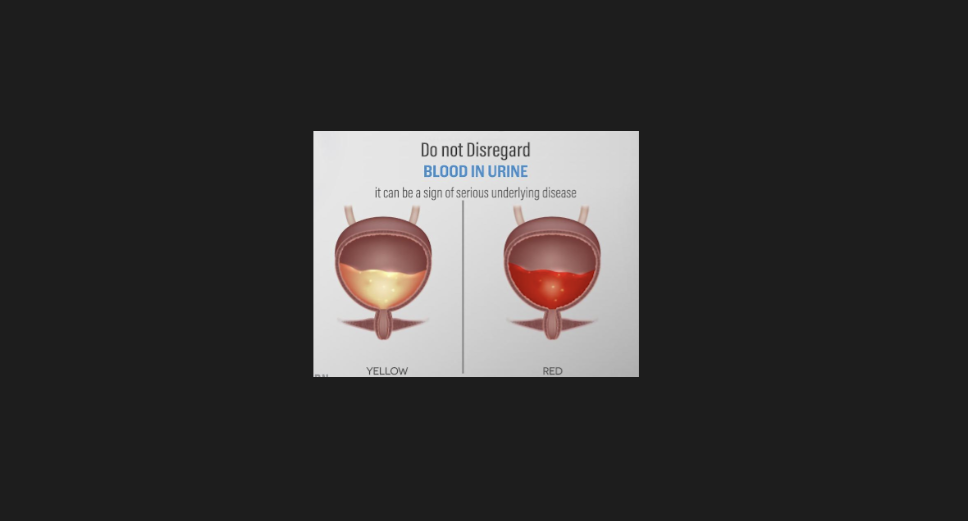
Hematuria—blood in the urine—is one of the most important warning signs in medicine.
It is also one of the most frequently misinterpreted, minimized, or attributed to less serious causes.
This case illustrates what can happen when a known red flag is repeatedly documented—but not fully acted upon.
The First Red Flag: Hematuria
The patient initially presented with blood in the urine in October 2022, confirmed by urinalysis showing a large amount of blood and red blood cells.
At that point, treatment for a urinary tract infection (UTI) was reasonable.
But here’s the key:
👉 Hematuria should not be explained once—it must be resolved or investigated.
The Pattern That Followed
Over the next 14+ months, the patient continued to show:
- Persistent hematuria
- Repeated abnormal urinalyses
- Ongoing treatment with antibiotics
- No definitive diagnostic workup
Multiple visits documented blood in the urine—yet:
- Urinalysis results were not consistently addressed in progress notes
- There was no documented escalation despite persistence
- Follow-up intervals extended as long as six months
At one point, the plan was simply to:
“Return in 6 months” despite ongoing abnormal findings.
A Critical Miss: Failure to Connect the Dots
Several important clinical indicators were present:
1. Persistent Hematuria
Repeated abnormal UAs from:
- October 2022
- January 2023
- Throughout 2023
- Into early 2024
2. Declining Hemoglobin
The patient’s hemoglobin steadily dropped:
14.4 → 12.9 → 10.9 → 10.2 → 7.6
This is not subtle.
A falling hemoglobin in the presence of hematuria should trigger:
- Immediate investigation
- Concern for ongoing blood loss
- Consideration of malignancy
Yet documentation shows that this trend was:
❌ Not consistently acknowledged
❌ Not clearly addressed by primary providers
❌ Primarily noted by pharmacy, not medical providers
Missed Opportunities for Earlier Diagnosis
The record reflects multiple opportunities where escalation could have occurred:
- After the first recurrence of hematuria
- After persistent abnormal urinalyses
- When hematuria continued without infection symptoms
- When hemoglobin began to decline
- When symptoms persisted despite antibiotics
Instead, the working diagnosis remained:
➡️ Recurrent UTI
➡️ Possible prostatitis
Even when:
- Urine cultures were negative
- Symptoms did not fully align with infection
- Antibiotics did not resolve the issue
- When the Workup Finally Happened
The diagnostic process did not begin in earnest until January 2024—over a year after the initial finding.
At that point:
- Urology was consulted
- Cystoscopy was performed
- A suspicious lesion was identified
By April 2024, the patient presented critically ill with:
- Severe anemia (Hgb 7.6)
- Ongoing bleeding
- Weakness and pallor
He required hospitalization and blood transfusions.
The Diagnosis
The final diagnosis:
Invasive high-grade urothelial carcinoma with lymph node metastasis (Stage pT3b N2)
This is advanced bladder cancer.
At this stage, treatment required:
- Radical cystectomy
- Urinary diversion
- Chemotherapy
The Legal Question: Delay vs Outcome
In failure-to-diagnose cases, the central issue is not whether the patient had cancer.
It is:
Was there a delay in diagnosis that impacted the stage, treatment, or outcome?
This case raises several key considerations:
Was the delay avoidable?
Hematuria persisted for over a year without definitive workup.
Were red flags present?
Yes—repeatedly.
Was there a failure to escalate?
Yes—despite ongoing abnormal findings.
Did earlier diagnosis potentially change the outcome?
That becomes the critical expert question.
A Complicating Factor: Patient Non-Compliance
This case also includes an important defense consideration:
The patient had a documented history of:
- Missed appointments
- Medication non-compliance
- Refusal of care (including hospitalization)
This introduces a shared-responsibility argument.
However, even in the presence of non-compliance:
👉 Providers are still responsible for recognizing patterns
👉 Providers must document efforts to follow up
👉 Providers must escalate when risks persist
Why This Case Matters
This case is not about a rare condition.
It is about a common symptom—hematuria—that carries well-established clinical significance.
The standard is clear:
Painless hematuria, especially persistent, must be considered cancer until proven otherwise.
Key Takeaways for Attorneys
When evaluating similar cases, look for:
- Repeated abnormal findings without resolution
- Failure to trend labs (especially hemoglobin)
- Delayed referrals to specialists
- Over-reliance on a single diagnosis (e.g., UTI)
- Lack of documented clinical reasoning for not escalating
These cases are often built not on one mistake—but on a pattern of inaction.
Final Thought
In medicine, patterns matter.
And in this case, the pattern was clear:
Blood in the urine.
Again.
And again.
And again.
Until it could no longer be ignored.